
USBridge | Remote Hardware Access

KVM over IP for Full BIOS Control

USBridge gives you real out-of-band remote access from power-on to OS, without software agents, IPMI dependencies, or vendor lock-in.
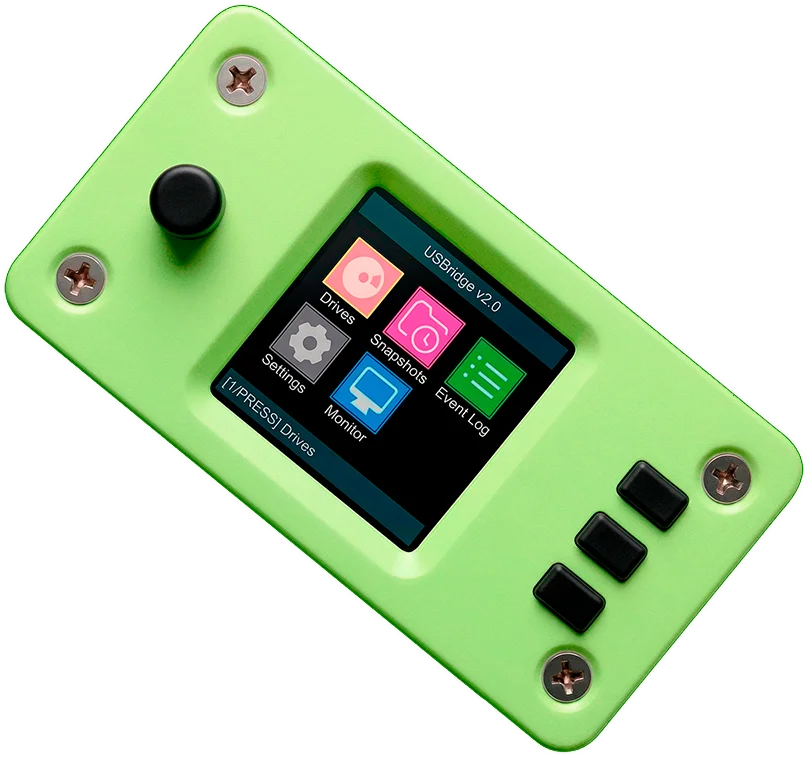
USBridge KVM 2.0: Professional hardware for remote BIOS management and bare-metal provisioning with integrated status display
SSHBIOS Terminal
0Agents Required
CoWBTRFS SNAPSHOTS
RK3566QUAD-CORE ARM

Technical demonstration of USBridge capturing raw BIOS video and rendering it as a deterministic SSH terminal for low-bandwidth remote server management.

Your BIOS, now as interactive text.

The system captures raw video and renders it as an interactive, low-latency SSH text interface. Manage servers with zero latency, even when the OS is down.

Unmatched Core Capabilities

HARDWARE-LEVEL CONTROL & RECOVERY

Immutable Snapshots

Hardware-level Btrfs CoW architecture. Absolute protection against ransomware through unalterable records. Learn more

PXE Replacement

Mount ISO, VDI, or VMDK images directly. Eliminate complex PXE infrastructure with native remote mounting. Learn more

HID Emulation

Seamless hardware keyboard & mouse control via USB HID Boot Protocol. Learn more

Low-Latency Video

Stable, real-time BIOS/UEFI feed without OS dependency. Learn more

USB-LAN Bridging

Plug-and-play network access for updates during bare-metal OS setup. Learn more

Virtual Media

Boot remote images and execute system recoveries entirely out-of-band. Learn more

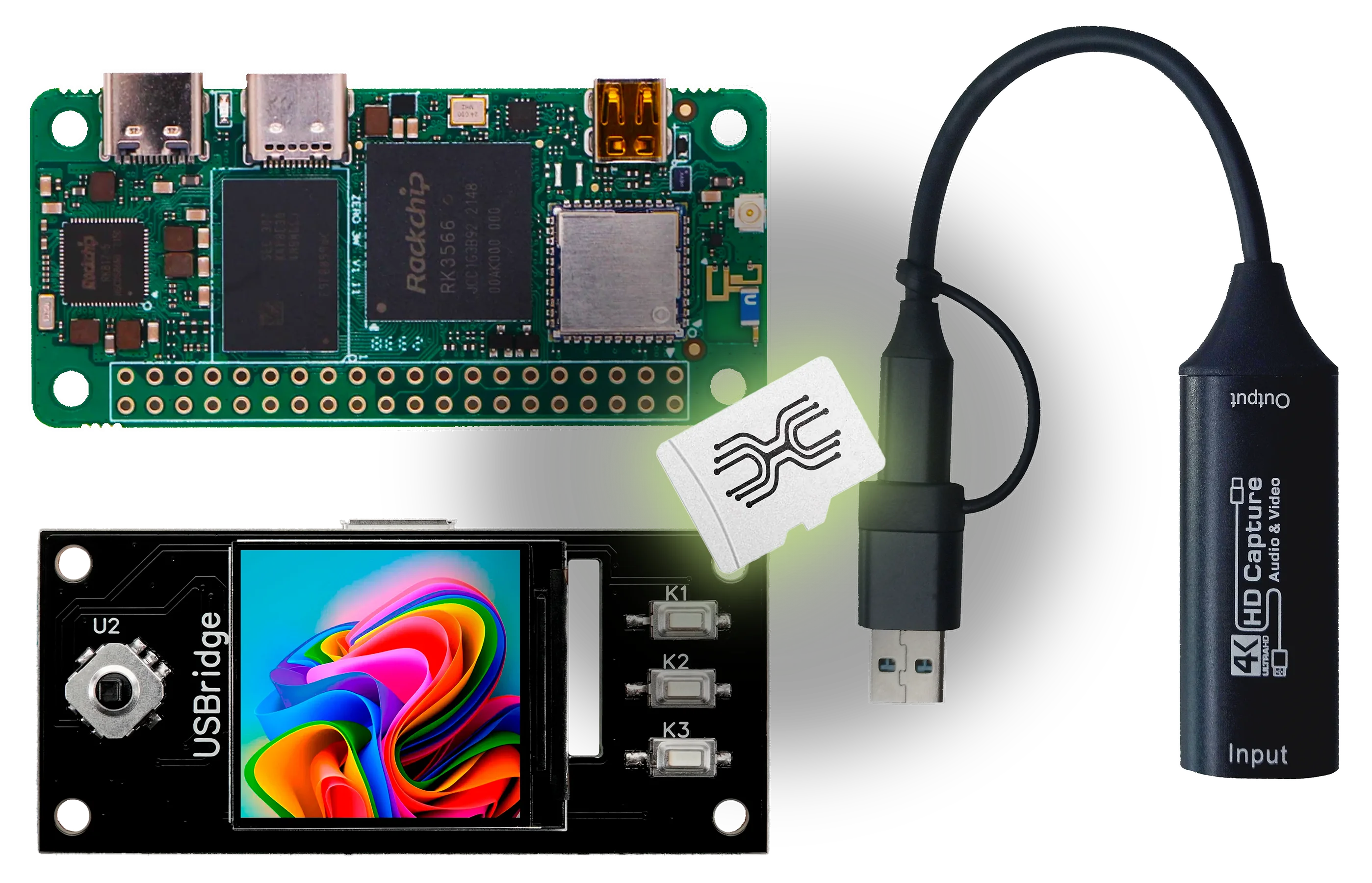
Core KVM device for remote BIOS management and bare-metal provisioning featuring USB-C and video ports for SSH BIOS access and PXE boot replacement solutions.
Core KVM interface overview

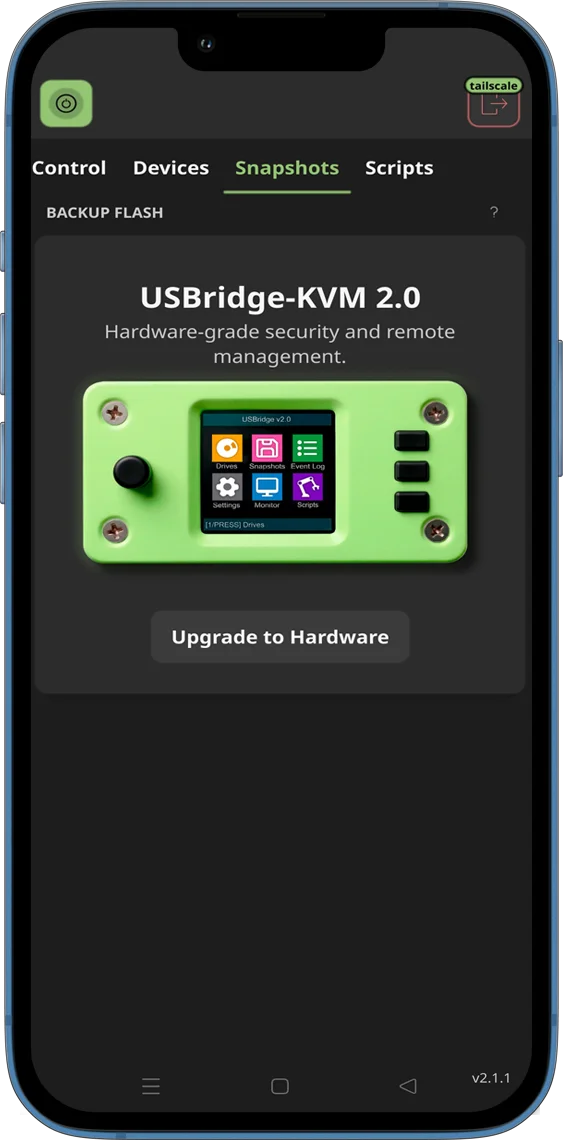
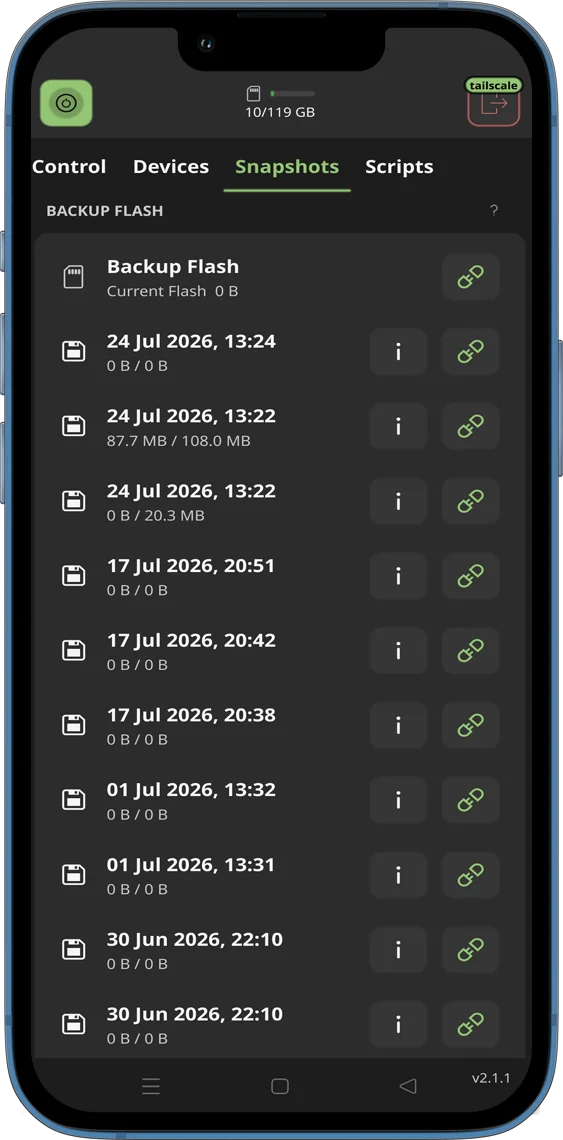
Immutable Snapshots

Hardware-level Btrfs CoW architecture. Absolute protection against ransomware through unalterable records. Learn more

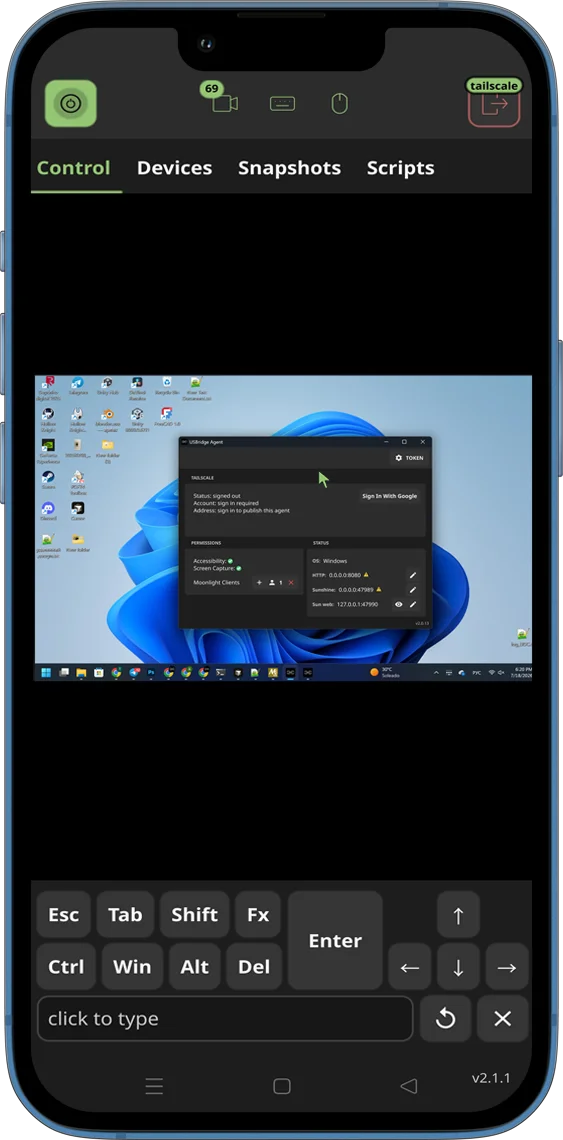
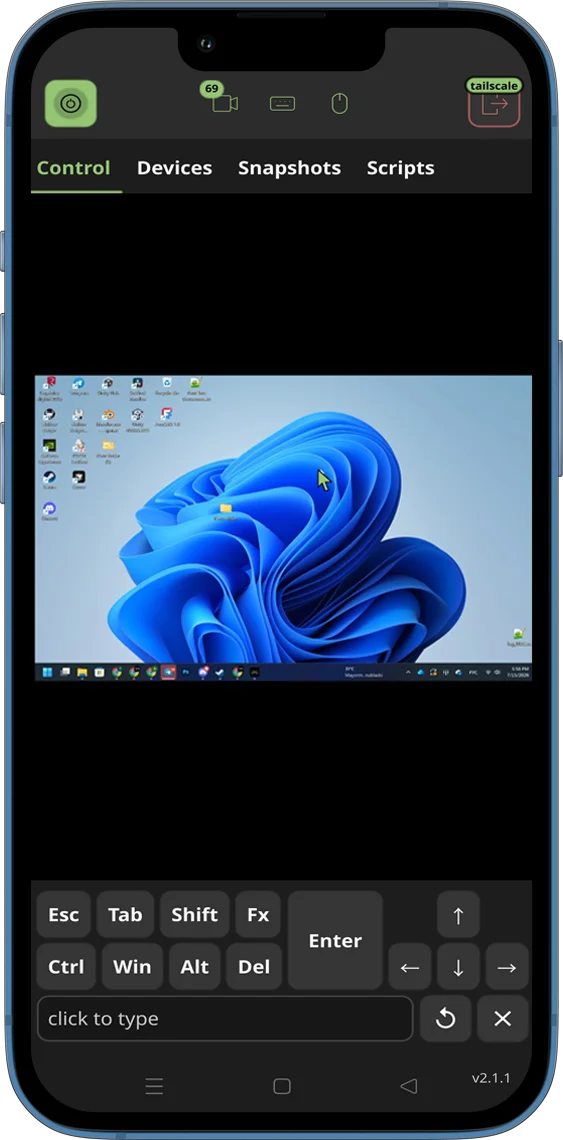
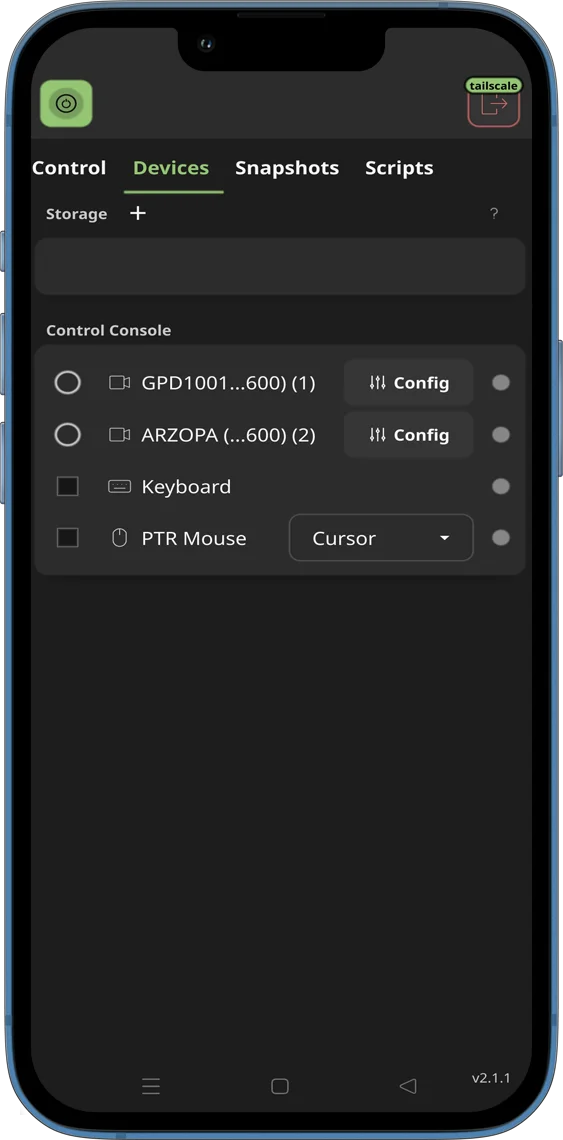
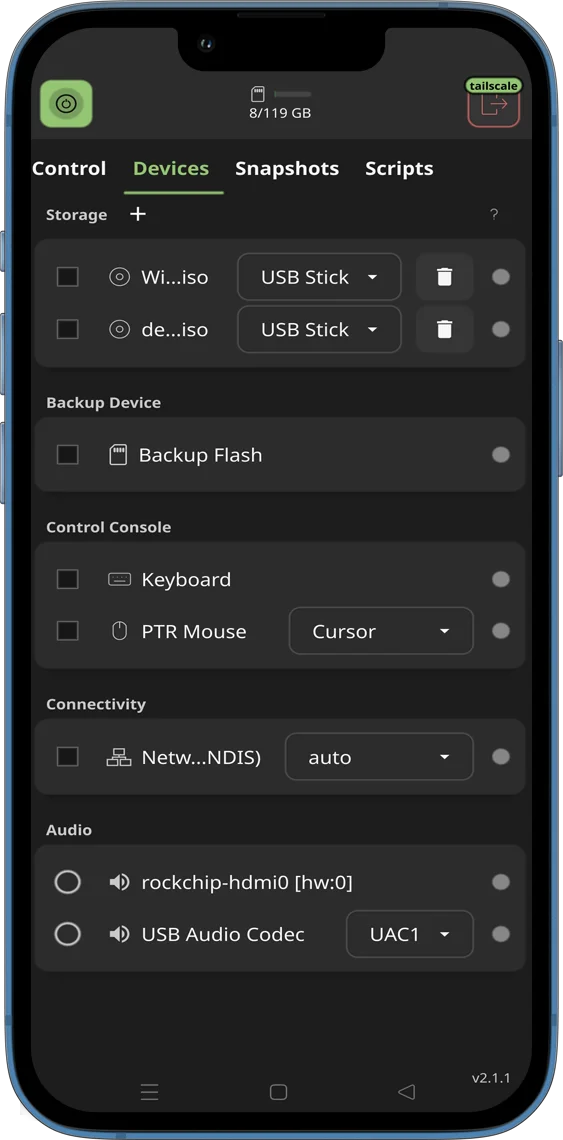
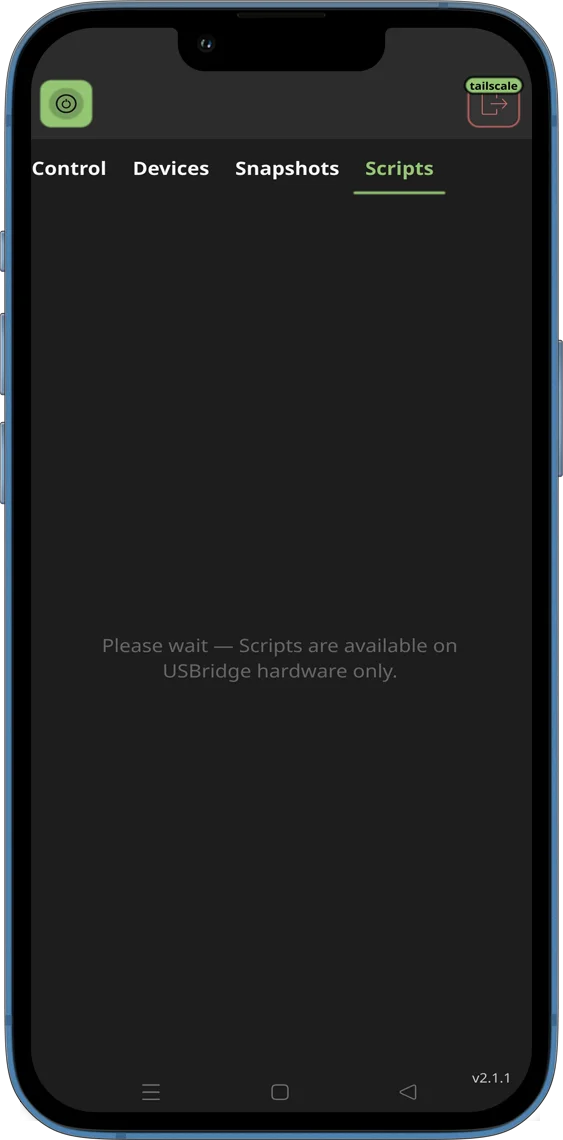
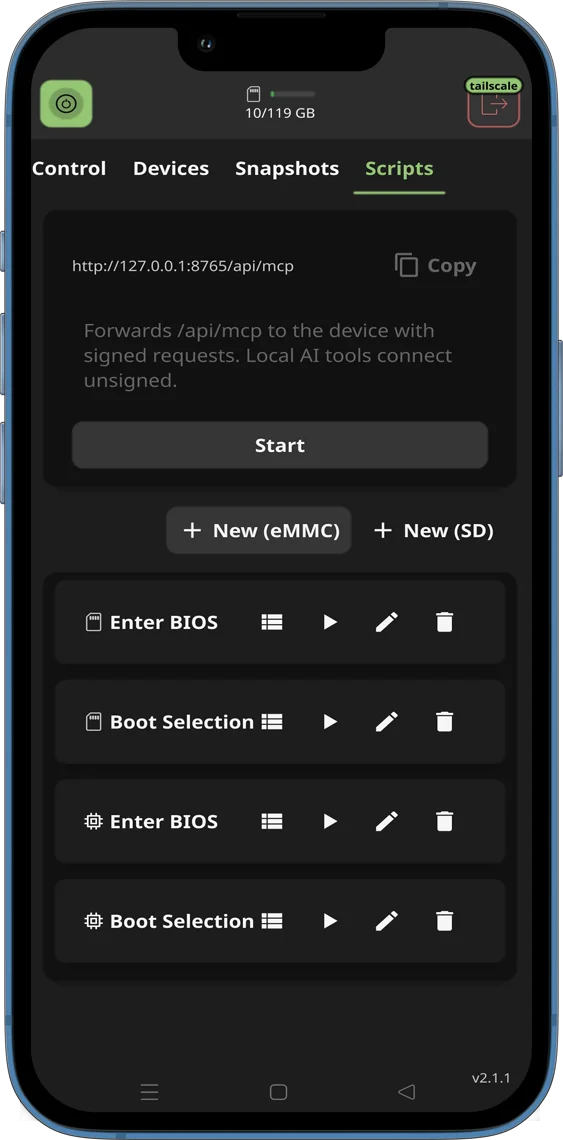
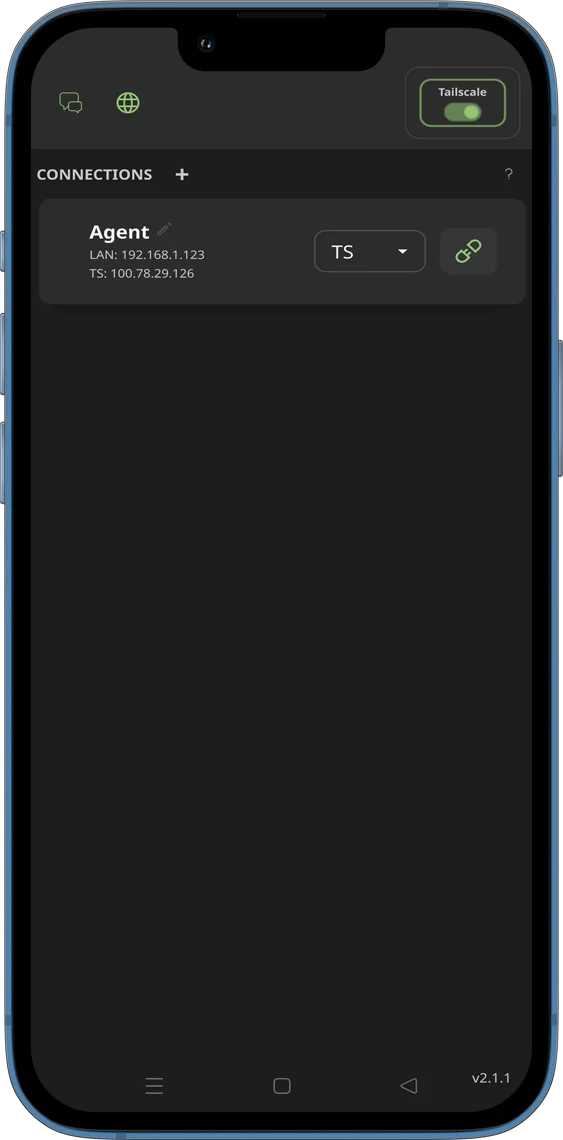
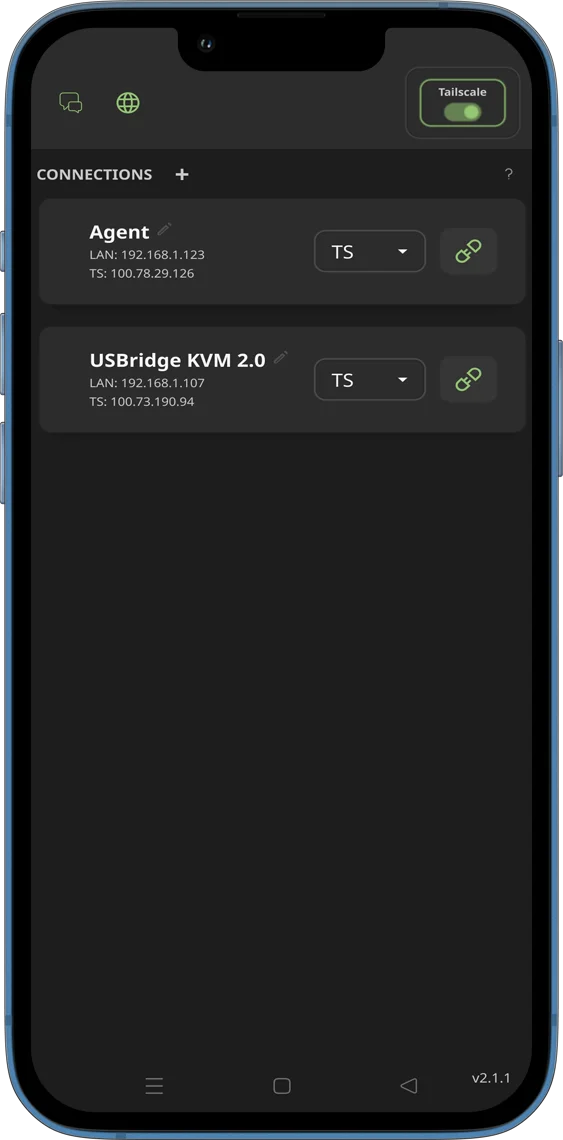
USBridge mobile interface showing remote host selection and instant session establishment.

Control in Your Pocket

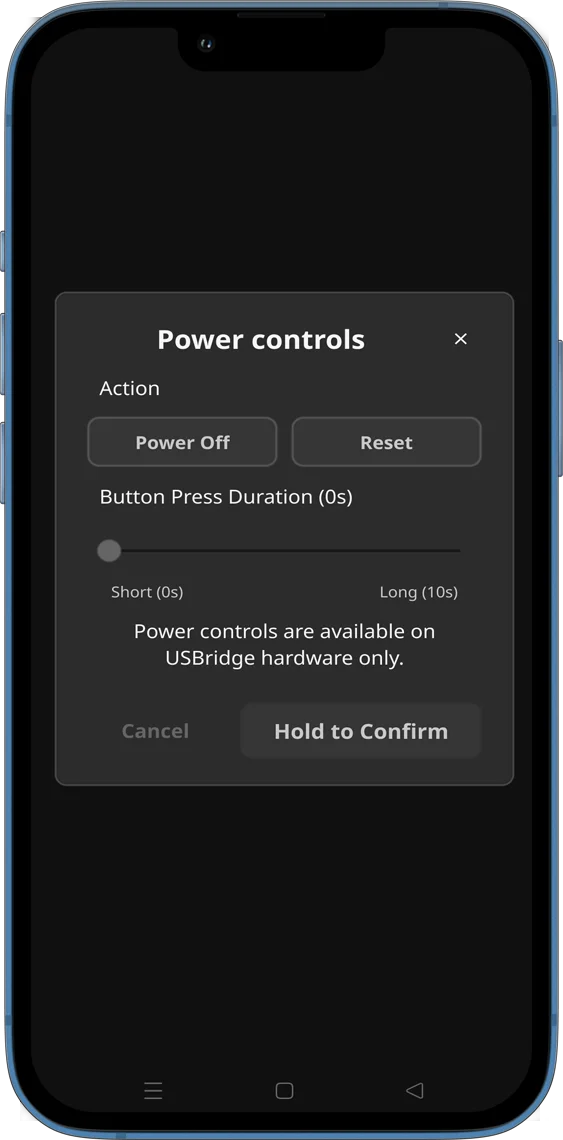
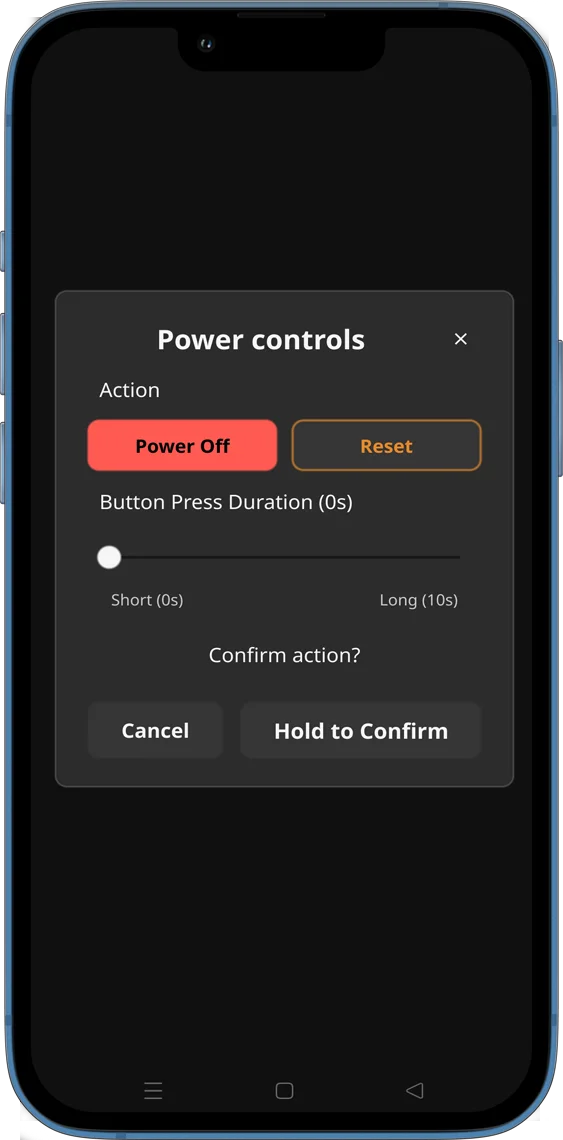
A mobile dashboard built for real incidents. Switch between control, recovery, and device views in one tap while staying fully connected to your infrastructure.

Reach any host in a couple of taps.

Open the device list, pick the target machine, and establish a remote session fast when every second matters.

HYBRID ECOSYSTEM

beta

USBridge Remote

Hardware precision meets software speed.

WindowsmacOSLinux

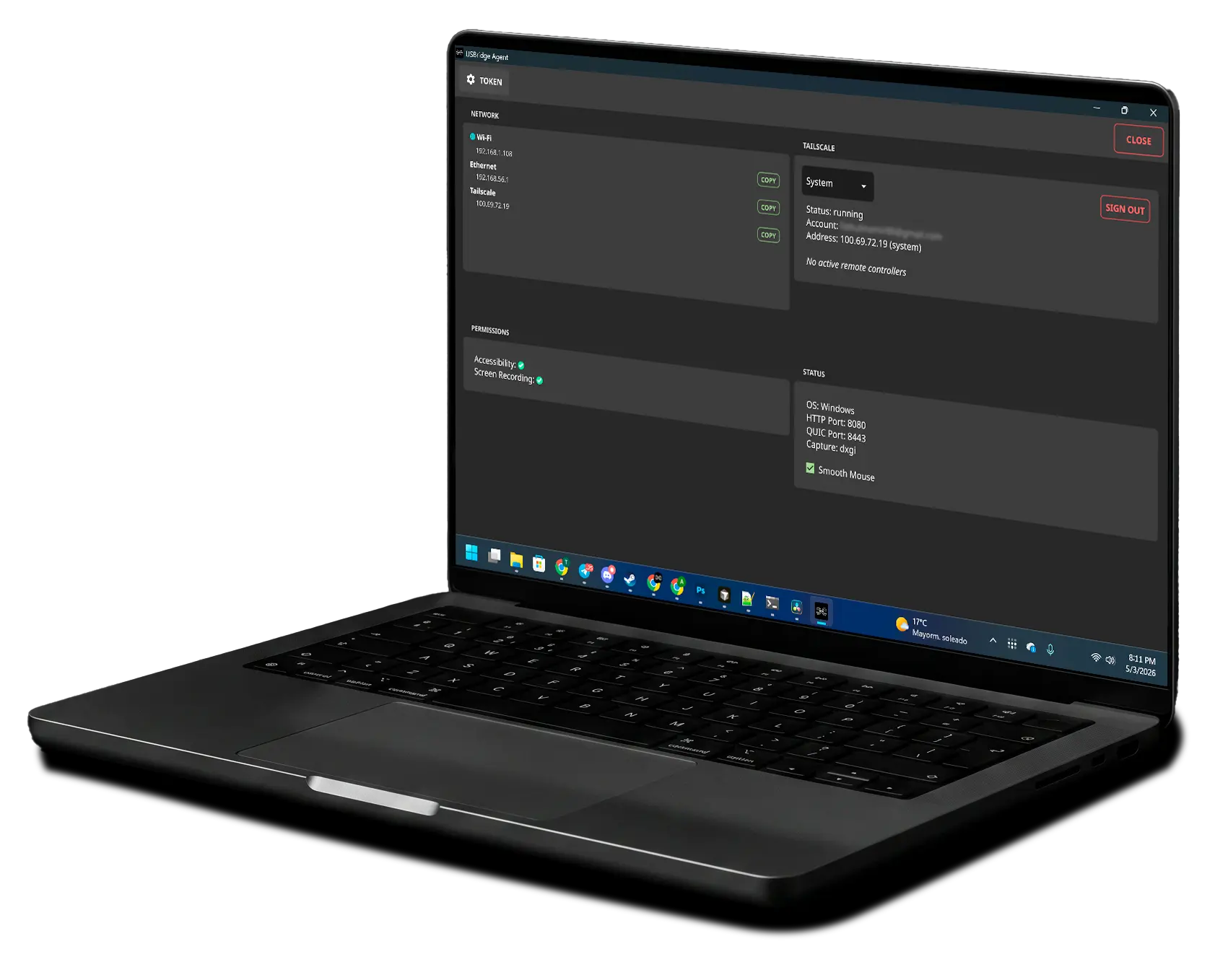
Experience a unified management workflow. Switch seamlessly between hardware-level KVM control and a high-performance software agent. With native Tailscale integration, you can enjoy a secure 2K remote desktop experience with ultra-low latency, managing your entire infrastructure from a single, streamlined client.

USBridge Remote agent interface on a laptop with Tailscale integration and 2K streaming support.
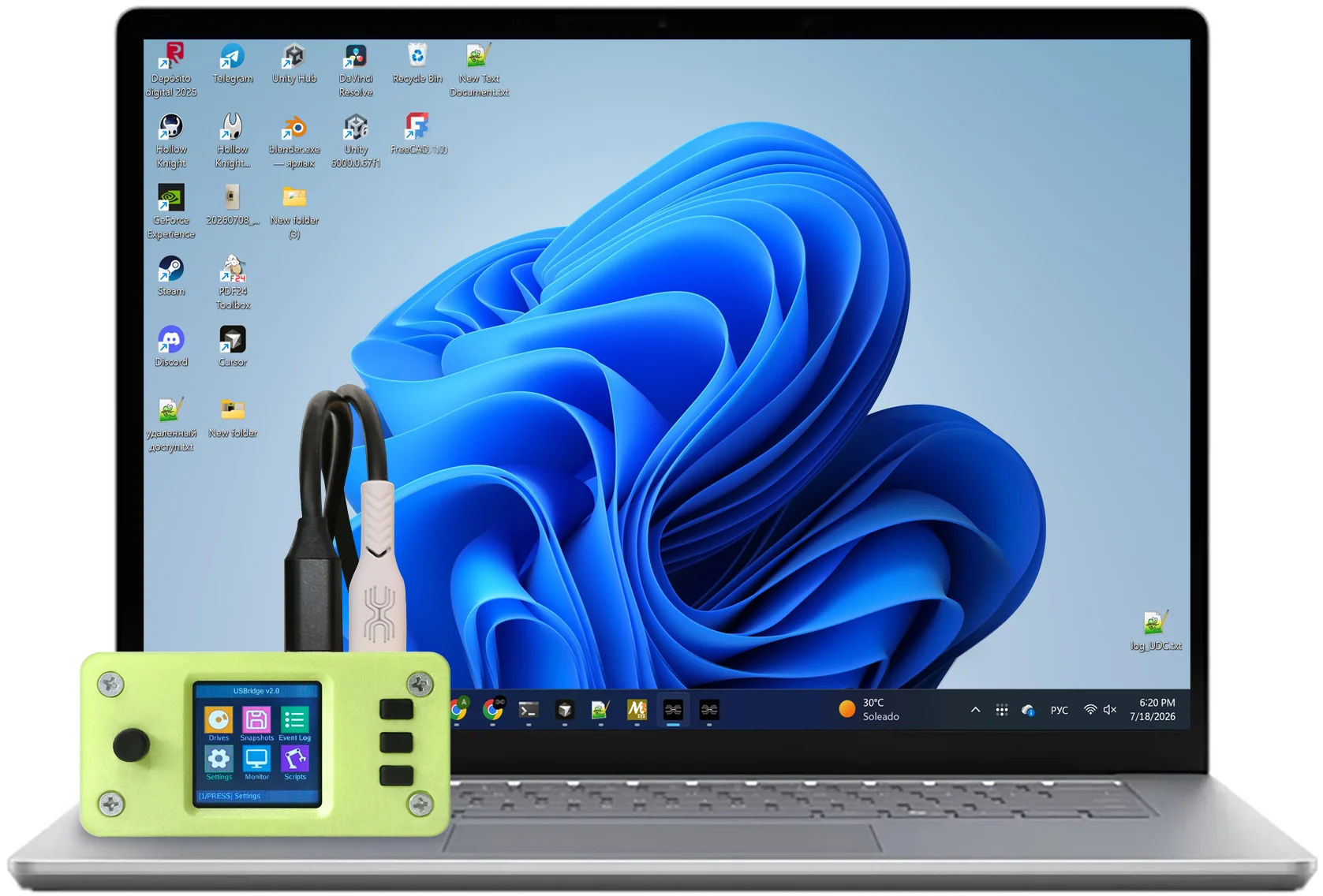
USBridge Remote software supports Windows, macOS, and Linux for ultra-low latency infrastructure management.
USBridge out-of-band management device shown connected via USB-C and standard USB cables, featuring a small built-in display and physical control buttons.

How USBridge Stands Out

Software tools fail when the OS crashes. USBridge provides a permanent out-of-band management channel, delivering enterprise-grade hardware access without the complexity of traditional IPMI or the limitations of DIY setups.

FeatureUSBridgeSoftwareTraditional KVM
Out-of-band AccessAlways onOS-dependent onlyYes
BIOS-to-Text TerminalUnique
Isolated Data SnapshotsUnique (Btrfs-based)
Mass Storage EmulationISO & PXE BootingISO Only
Remote Access ModeHybrid (KVM + Agent)Software Agent onlyHardware KVM only
Power ManagementHardware-levelYes

USBridge

Out-of-band AccessAlways on
BIOS-to-Text TerminalUnique
Isolated Data SnapshotsUnique (Btrfs-based)
Mass Storage EmulationISO & PXE Booting
Remote Access ModeHybrid (KVM + Agent)
Power ManagementHardware-level

Software

Out-of-band AccessOS-dependent only
BIOS-to-Text Terminal
Isolated Data Snapshots
Mass Storage Emulation
Remote Access ModeSoftware Agent only
Power Management

Traditional KVM

Out-of-band AccessYes
BIOS-to-Text Terminal
Isolated Data Snapshots
Mass Storage EmulationISO Only
Remote Access ModeHardware KVM only
Power ManagementYes

BEYOND THE BOX

Modular by Design

USBridge is more than a standalone KVM; it is an extensible hardware platform. Through its modular architecture, you can integrate specialized add-ons from diagnostic displays to the Power Management Module, ensuring your management interface evolves alongside your infrastructure requirements.

USBridge

Get Notified on Launch

Subscribe for Crowd Supply launch alerts, hardware milestones, and early access to the first production batch.

TECHNICAL SPECIFICATIONS & HARDWARE MODELS

Frequently Asked Questions

Everything you need to know about the USBridge ecosystem. From hardware-level security to advanced data lifecycle management, explore the technical foundation of our remote access platform.

Core Platform & CapabilitiesPlatform and capabilities

Does BIOS-to-Text support modern graphical UEFI?

USBridge BIOS-to-Text is optimized for classic, text-oriented environments. Full-screen graphical UEFI layouts with complex mouse-driven UIs are not officially supported for deterministic parsing.

What hardware powers USBridge?

USBridge is powered by the Rockchip RK3566 platform (quad-core ARM Cortex-A55). The core software stack is fully implemented in Go for maximum performance.

Is USBridge open source?

The base firmware and system software are planned for open-source release. The core BIOS-to-Text rendering engine remains closed-source proprietary intellectual property.

Why choose USBridge over PiKVM?

USBridge delivers higher processing power via the RK3566 SoC and introduces unique enterprise capabilities: deterministic text-based SSH interaction, deep API automation, and hardware-isolated, immutable Btrfs snapshots.

Storage & Media LifecycleStorage and data lifecycle

Can I use any SD card with USBridge?

Standard consumer SD cards are highly discouraged due to continuous Btrfs Copy-on-Write (CoW) write pressure. High-endurance industrial-grade surveillance cards or external SSDs are strictly required.

Can I use a USB Flash drive or an external SSD for storage?

External USB storage support is under active development. A forthcoming firmware update will enable full compatibility with high-endurance USB flash drives and external SSDs for reliable, long-term snapshot storage.

Will snapshots wear out the built-in eMMC?

No. All system snapshots are stored exclusively on external media. The onboard eMMC storage is strictly reserved for the core operating system and bridge software stack.

Security & ImmutabilitySecurity and immutability

How is USBridge better than a standard NAS for backup?

USBridge completely omits SMB, NFS, or other network file-sharing protocols. A compromised host operating system has zero network paths to delete, modify, or corrupt isolated hardware snapshots, ensuring absolute ransomware resilience.

How does USBridge achieve snapshot immutability?

Immutability is achieved via architectural hardware isolation. The target host interacts with the device purely as generic raw block storage with no management or snapshot permissions. Once storage capacity is reached, the archive automatically enforces a read-only state.

Is USBridge a physical data diode?

No. The KVM hardware link is inherently bidirectional. Instead, the platform enforces strict logical immutability: the target host can stream inbound data but is architecturally blocked from purging, modifying, or rolling back existing snapshots.

Virtual Media & DeploymentPXE ALTERNATIVE AND DISK MOUNTING

Can USBridge replace a PXE boot server?

Yes. USBridge replaces complex PXE/TFTP infrastructures by emulating physical USB mass storage devices directly at the hardware level. This allows administrators to mount bootable ISO images or raw partitions from a local workstation straight to the bare-metal target server.

How does Virtual Media mounting work?

The platform utilizes hardware-level network encapsulation. The target motherboard detects the remote disk image (ISO, VDI, or VMDK) as a standard, physically attached USB drive, ensuring plug-and-play compatibility across legacy BIOS and modern UEFI.

Will mounting a remote drive modify my source image?

No. Using a hardware-enforced Read-Write Overlay mode, all inbound write operations from the target server are dynamically redirected to an isolated overlay file on your workstation. The original golden source image remains completely untouched.

What are the performance limits of Virtual Media?

Operating over a dedicated USB 2.0 Hi-Speed path backed by an integrated LPDDR4X RAM cache, USBridge delivers a stable throughput of 35-40 MB/s. This matches the user experience of a high-end HDD or entry-level SATA SSD over standard LAN layouts.

Unified Remote Access (Software Agent)Standalone agent and internet connectivity

Can I use the USBridge Remote agent without the KVM hardware?

Yes. The software agent is a completely standalone infrastructure solution. It can be installed on any independent server or workstation to provide high-performance remote desktop streaming (up to 2K resolution) with ultra-low latency without requiring the physical hardware module.

Are there session limits or connection caps on the free agent?

No. USBridge Remote enforces zero session time limits, imposes no caps on concurrent connections, and requires no active subscriptions or hidden fees. It functions as a completely free tool for bare-metal infrastructure management.

How does the remote agent connect without port forwarding?

Through native, built-in Tailscale integration. The software automatically initializes a secure, encrypted peer-to-peer (P2P) mesh tunnel between the operator client and the target agent, bypassing complex NAT topologies and rigid corporate firewalls without router configuration.

Why use the software agent instead of the hardware KVM?

The agent leverages native hardware video acceleration (via FFmpeg: DXGI, VAAPI) and low-overhead adaptive streaming protocols to deliver significantly higher frame rates than a hardware KVM loop. While the hardware module is mandatory for out-of-band BIOS access, the agent is optimized for day-to-day work inside a running OS.

Is there an account or credential requirement for target machines?

No. No central account registration is required on target servers. Access control is securely validated using ephemeral connection tokens and direct P2P Tailscale addresses, ensuring a lightweight, privacy-focused deployment.

ENGINEERING & DESIGN

Behind the Hardware

Amir Fatkullin, Lead Hardware Engineer of USBridge project.

Amir Fatkullin is the lead engineer on the USBridge project. My goal is to bridge the gap between software flexibility and hardware-level reliability. I am developing USBridge as an open, modular, and secure out-of-band management platform for infrastructure.

Built on the high-performance Radxa Zero 3W compute module, every piece of hardware is engineered with a focus on stability and bare-metal control.

Follow the development: Stay updated with the latest hardware milestones and engineering insights on my LinkedIn or check out my dev logs on Reddit.

guest@usbridge:~/menu$ ls -la

total 6

guest@usbridge:~/menu$